




Stair Treads
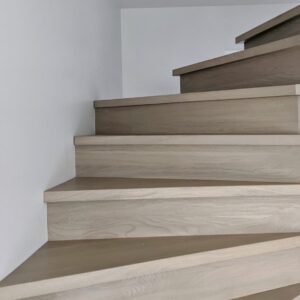
Wooden stair treads are an integral part of the interior.
We usually manufacture stair treads from solid ash or oak hardwood. The difference between these two types of wood is that oak absorbs color better, while ash is more variegated and lighter. The color is usually matched to the flooring surface or door shades. The stair tread can be finished with oil, or stained and lacquered.
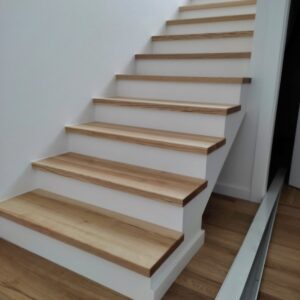
The standard thickness of a tread is 40 mm. Depth ranges from 260 to 320 mm. Risers can be of various thicknesses from 20 mm up to the thickness of the tread itself. Risers can be painted in the wall color, in which case the tread is “extended” forward by about 25 mm.
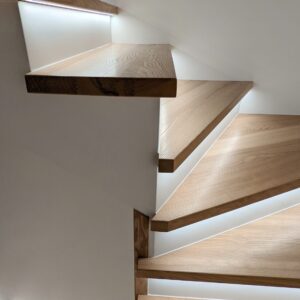
Upon request, grooves for LED lighting can be milled into the tread.
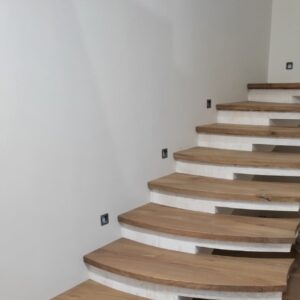
Stair treads are mounted on concrete or metal structures – stringers. We can design and manufacture both metal and concrete stair structures. For outdoor stair finishes, openwork stair treads are most commonly used, which we can manufacture according to individual needs.
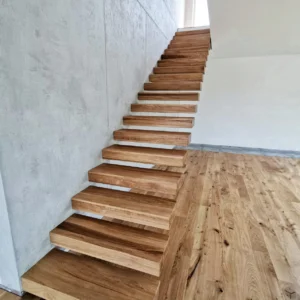
For clients who want exclusive stairs, we can offer a metal stair structure emerging from the wall, which we “wrap” in wood so the stairs appear as if they are hanging in the air. (E.g. here)
When stair treads are installed between two walls or are very long – we recommend using them with moldings. In the first case, to ensure no gaps remain between the wall and the tread; in the second, to help the tread press down better and prevent it from warping.
All our products are made only from the highest quality materials and comply with all construction regulations.
Stair Tread Pricing
We always strive to offer our clients the best price-to-quality ratio. The price of stair treads depends on the project size, the type and price of wood used for the treads, the construction of the stringers (concrete or metal), and installation nuances. Contact us – and we will calculate the price for your project.
Which stair tread finishing method to choose?
The stair treads must finish at the top in one of these three ways:
• „False“ (Flush) tread
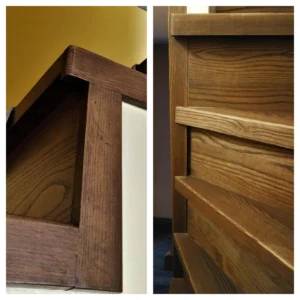
• Wooden corner
• Aluminum corner
All three methods create a different final look.
Advantages of a „False“ tread – the stair finish ends up flush with the floor. This method requires higher craftsmanship from the specialist to ensure everything goes smoothly. Usually, this tread is made slightly thinner, and additional preparation is required before installation, i.e., chipping away a small (~15–20 mm) layer of concrete. This solution provides the stairs with a neat and seamless finished look, as there are no protruding elements.
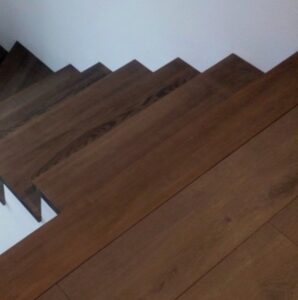
Advantages of an Aluminum corner – its color is usually matched to the color of the stair railings. The corner is quite thin (about 2 mm), so it doesn’t cause tripping during use.
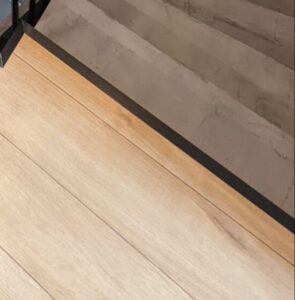
Advantages of a Wooden corner – the color is matched to the treads, creating a unified look. The price is lower than a „false“ tread, and no prior preparation is required.
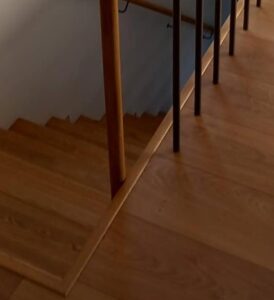
During the measurement process, our professional employees will always advise on which option to choose.
How to maintain wooden stair treads?
If the stair tread is coated with oil, it should be refreshed every 3-5 years.
If no foreign objects from outside, such as sand or other sharp elements, get onto the stairs, they can be refreshed every 5 years; if the stairs are closer to the exterior door and dirt gets on them, refreshing may be needed every 2-3 years.
Maintenance work is not complicated and can be done yourself. You only need to lightly scuff the tread with fine-grit sandpaper and apply oil of the same or similar color. Wipe off the excess oil after five minutes.


